


Author: Alpha Wildlife
Credentials: NWCOA Certified Wildlife Control Operators
Description: Veteran-owned wildlife removal specialists serving Tennessee, South Carolina, & Kentucky since 2018
Last Updated: July 22, 2026
Quick Answer
If you happen to find a snake hiding inside your home, don’t panic, don’t try to capture the snake yourself, and don’t try to identify the snake as venomous or non-venomous. We recommend you maintain a safe distance (for you, your family, & your pets) and contact a professional wildlife control company to remove it.
Even though most snakes found inside homes are non-venomous, there’s always a chance that it could be.
The safest approach is to monitor the snake, give it space, and wait for a professional to safely remove it.
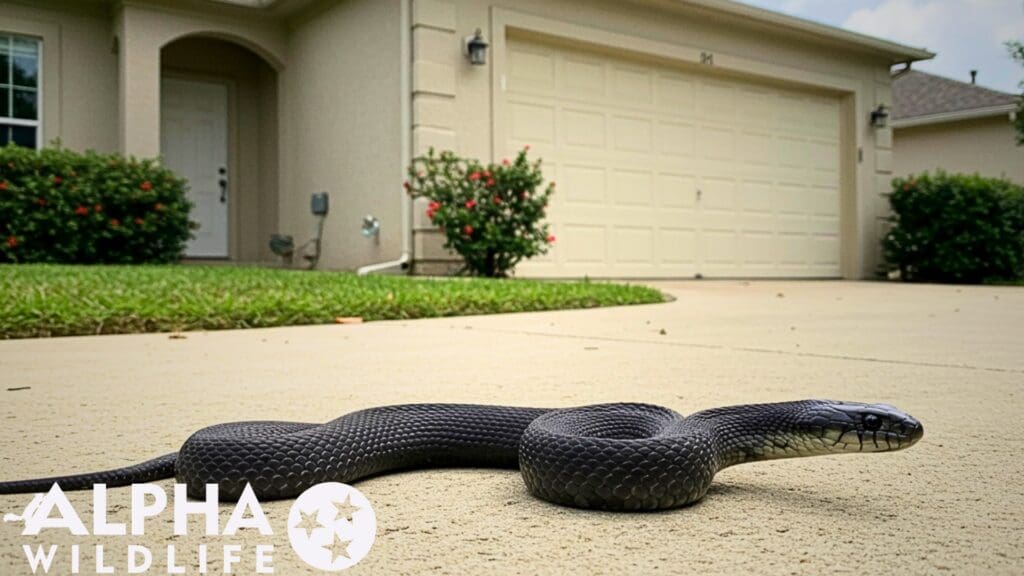
What Do I Do When There’s a Snake in my Home?
Step 1: Stay Calm
Yeah, I’m sure that won’t be hard at all right?
That’s like telling someone who encounters a Great White while swimming in the Ocean to just stay calm.
However, it is the best advice.
We know that you didn’t plan on finding a snake in your laundry room, garage, crawlspace, basement, or kitchen.
And that your first reaction was probably to scream, yell, and let a few choice words fly out.
Honestly, I’d react the same way.
But, once you’re done showcasing your cussing abilities, take a deep breath and try to keep your cool.
The good news is most snakes want absolutely nothing to do with you.
They didn’t plan on scaring you and they are usually just as surprised to be there as you are.
So, again, take a deep breath, keep your distance, and let’s figure out what to do next.
Step 2: Keep Your Children (and Pets) at a Safe Distance
Now that you’ve composed yourself, make sure the kids and your pets are moved to a safe area (preferably to a different room). Dogs might be interested to see what all of the commotion is about and try to get close to the snake.
And that’s usually when the snake defends itself and now, you’re dealing with a snake bite on a dog. Even if the snake is non-venomous, that’s not a good way to start the day.
Keeping your children and pets at a safe distance is very important.
Step 3: Don’t Try to Catch It
I know what you’re thinking.
I can get this bad boy out myself.
My kids will think I’m a hero and my wife will stare at me longingly like she did back in the day.
So, you grab a broom and a laundry basket and prepare for battle.
Not the best idea.
Unfortunately, many snake bites occur when people attempt to handle or corner a snake. Even non-venomous snakes may bite if they feel trapped or threatened.
Unless you are experienced and confident in identifying the species, it’s best to avoid direct contact.
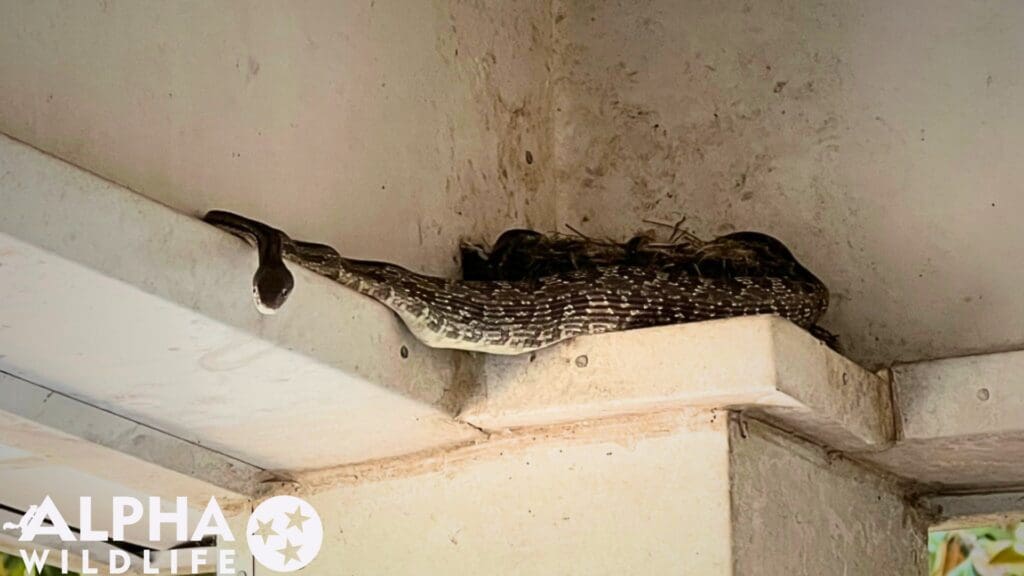
Step 4: Keep a Visual on the Snake
I’m not asking you to have a staring contest with this reptile, but you need to keep it in sight from a safe distance.
This will save a lot of time for when a wildlife professional arrives to take it away.
Trust me, you don’t want to say “well, it was right here, but now it’s gone.”
That’ll be a fun night for you and the fam.
Finding a snake that disappeared behind a water heater is much easier when you know where it went.
Step 5: Give the Snake an Exit Route
If you find yourself with a snake under your living room couch (yes, that’s really happened), leaving your front door open for a few minutes might do the trick.
If the snake is near an exterior door and can safely leave on its own, you may choose to open the door and allow it an opportunity to exit.
Now, allowing the snake a chance to escape is different than trying to chase it out the door yourself.
Think of it like this: the more you freak out, the better chance it will freak out.
Step 6: Try to Identify it From a Safe Distance
If you are completely unfamiliar with snakes and your only snake education is the snake scene in Raiders of the Lost Ark, I recommend you skip this step.
At a safe distance, try to determine whether the snake is venomous or non-venomous so you know the level of risk to you and your loved ones.
Here are the most common snakes we encounter in homes throughout Tennessee, South Carolina, and Kentucky:
- Black Rat Snakes
- Black Racers
- Garter Snakes
- Copperheads (Venomous)
- Cottonmouths (Venomous)
If you don’t know what type of snake it is, now is not the time to try and learn about them. Give us a call and we’ll check it out for you.
Step 7: Figure Out How It Got Inside
This is a step many homeowners fail to follow up on.
If the snake is removed, but you never find out how it got inside in the first place, you might get another “visitor” in the near future.
Here are the most common entry points for snakes into homes:
- Crawlspace vents
- Foundation gaps
- Utility penetrations
- Garage door corners
- Damaged weather stripping
- Roof and attic entry points
Our team offers snake removal & exclusion services. That means we will not only get rid of the snake for you, but we’ll seal up the entry point it came through.
Why the Heck is There a Snake in My House?
This is probably the best question to ask.
Believe it or not, snakes don’t wake up and say, “let’s scare the crap out of some people today!”
They find their way into homes because they are in search of:
- Food
- Shelter
- Water
- Protection
If your home provides one or more of those things, a snake may eventually find its way inside.
There are also ways your home might look “more desirable” to a snake than say your neighbor’s house.
Below are things that attract snakes to your property:
- Rodent Issues (If you have a rat or mouse problem, snakes will be next)
- Bird Feeders (These are like magnets for rodents, which means they are magnets for snakes too.)
- Tall Grass & Wood Piles (Great places for snakes to hide)
- Water Sources (Leaking spigots, standing water, draining issues, etc.)
In most cases, a snake problem starts as a rodent problem.
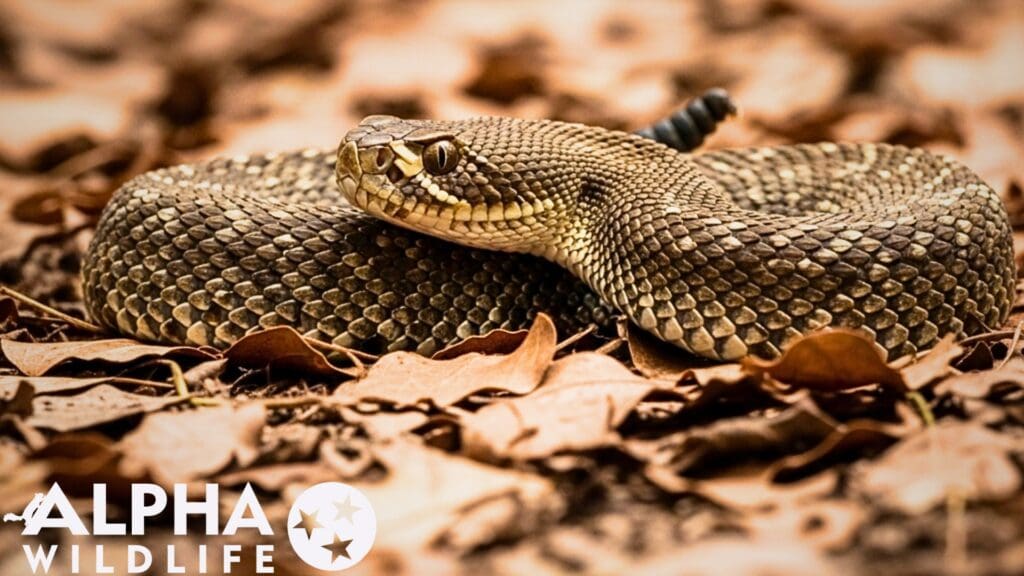
What If the Snake Is Venomous?
All it takes is one bite from a venomous snake and you could face serious health risks.
If you believe the snake in your home is venomous:
- Do not approach it
- Do not attempt to capture it
- Keep pets and children away
- Contact a professional wildlife removal company
Don’t put yourself or your family at risk of a potentially harmful snake bite. Let the professionals handle it!
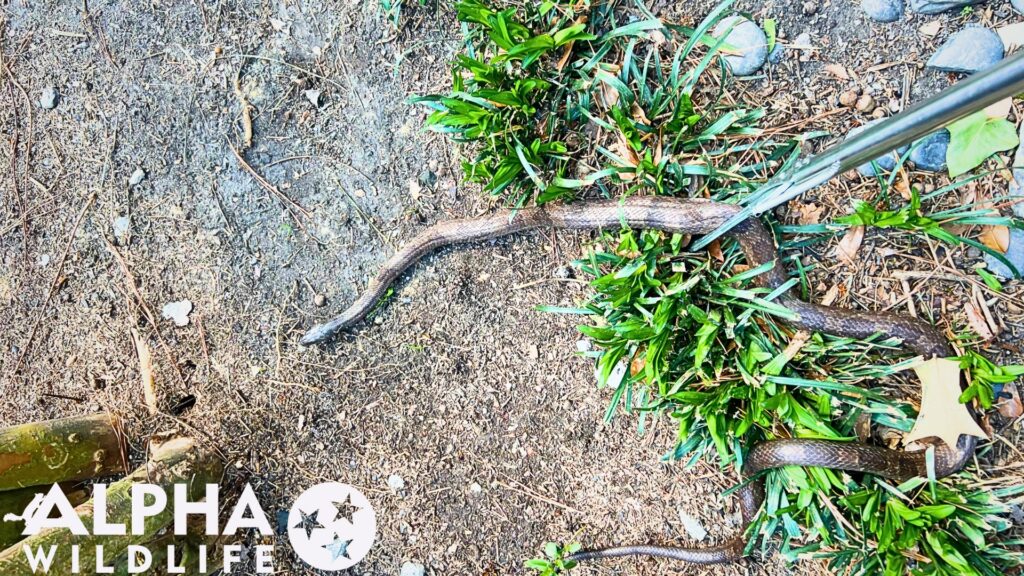
Common Places Snakes Hide Inside Homes
I’m not suggesting you grab a flashlight and go on a snake search.
I just want to point out the most common places snakes like to hide in homes in Tennessee, South Carolina, & Kentucky.
Snakes usually hide in the following areas:
- Crawlspaces
- Basements
- Garages
- Utility rooms
- Laundry rooms
- Behind appliances
- Attics
- Storage rooms
So, next time you’re doing a load of laundry, keep a look out for any slithery pests nearby.
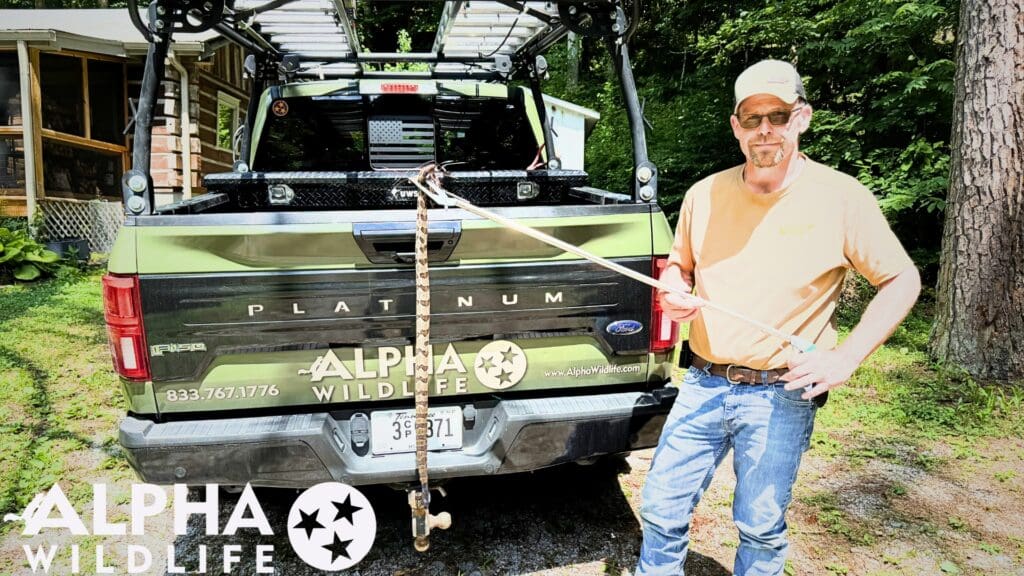
How To Keep Snakes Out of Your House & When to Call For Professional Snake Removal
If you think planting some garlic in your flowerbed might keep snakes away, we have some bad news for you. Unfortunately, there is limited evidence that suggests natural snake repellents work, so we do not recommend them.
We do recommend making your home as unattractive to snakes as you possible, that way they just move on to a different house on your block.
Here are some quick tips to keep snakes away:
- Eliminate all rodents (rats & mice)
- Repair damaged vents & seal any foundational gaps
- Keep your grass trimmed short
- Remove all leaf & wood piles
- Eliminate standing water & fix any leaky spouts
There is a simple solution for all of this. Call the professionals.
Unsure if the snake in your garage is venomous? Our guys can safely remove it.
Think there might be a few snakes in your crawlspace? Our team will investigate it for you.
If you need snake removal services near you, click on one of the links below for more information:
- Snake Removal Memphis TN
- Snake Removal Nashville TN
- Snake Removal Knoxville TN
- Snake Removal Chattanooga TN
- Snake Removal Columbia SC
- Snake Removal Charleston SC
- Snake Removal Louisville KY
Alpha Wildlife is veteran-owned & nationally certified in snake removal, exclusion, & prevention services. Contact us today for a free quote!
Snake in the House? – FAQs
Will a snake leave my house on its own?
Possibly. If you leave an open door nearby, there’s a chance the snake might leave, but it could also choose to stay. There’s no guarantee that a snake will leave on its own.
How did a snake get into my house?
Common entry points include crawlspace vents, foundation gaps, garage door openings, utility penetrations, and damaged weather stripping.
Are snakes attracted to houses?
Not directly. Snakes are usually attracted by food sources, shelter, water, and protection.
What attracts snakes inside homes?
Rodents, cluttered storage areas, crawlspaces, water sources, and easy entry points are among the most common attractants.
Should I try to catch a snake myself?
Absolutely not. Unless you are truly experienced in snake trapping, we recommend you avoid the snake and contact a professional to safely remove it.
Can snakes climb walls?
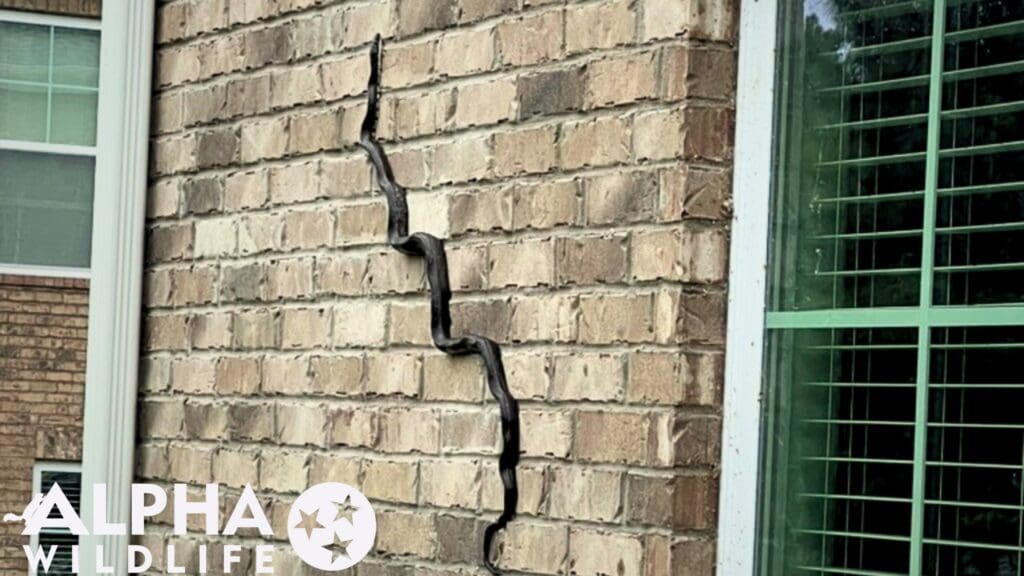
Yes. Rat snakes are excellent climbers and can scale brick, siding, trees, utility lines, and other structures to access attics and upper portions of homes.